
COURS DE SURF
Pour ceux qui préfèrent payer par chèque,
téléchargez le fichier pdf ci-dessous,
> Télécharger l’inscription au format pdf
Les stages concernent les personnes désirant s’initier ou se perfectionner de façon suivie aux techniques du surf ou à des disciplines associées (bodyboard, bodysurf et longboard).
Lors des cours particuliers, les objectifs sont fixés en fonction du niveau du stagiaire.
Tous ces objectifs seront adaptés en fonction de la motivation, de la condition physique et du niveau du stagiaire.
Un stage permet :
- d´apprendre à se redresser sur un surf et suivre une vague en mousse en position debout
- de connaitre les règles de sécurité
- de s’initier à la prise de vagues non déferlées
Football Betting Markets and Their History According to Betzoid
Football and wagering have shared an intertwined history stretching back well over a century, evolving from informal handshake agreements between friends into a sophisticated, globally regulated industry worth hundreds of billions of dollars annually. Today, football betting markets represent some of the most liquid and complex financial ecosystems in the world of sports, attracting everyone from casual fans placing a modest wager on the weekend’s results to professional syndicates deploying algorithmic models across dozens of markets simultaneously. Understanding how these markets developed, what they offer, and how they function provides essential context for anyone seeking to engage with them intelligently and responsibly.
The Origins and Historical Development of Football Betting
The roots of football betting can be traced to late nineteenth-century England, where association football was rapidly professionalizing and drawing enormous crowds. As early as the 1880s and 1890s, bookmakers who had established themselves in horse racing began extending their services to football matches, recognizing the sport’s growing popularity. These early markets were primitive by modern standards — bettors could typically only wager on the outright result of a match, choosing between a home win, an away win, or, in some formulations, a draw. Odds were set by individual bookmakers based on intuition, local knowledge, and the volume of money being placed on each side.
The interwar period of the 1920s and 1930s saw the emergence of the football pools, a form of communal betting that became deeply embedded in British working-class culture. Companies such as Littlewoods and Vernons invited participants to predict the outcomes of a selected list of matches, with winners sharing a pool of collected stakes. The football pools were not technically bookmaking — they operated more like a lottery — but they introduced millions of ordinary people to the concept of forecasting football results for financial reward. At their peak in the 1950s and 1960s, the pools attracted an estimated ten million participants per week in the United Kingdom alone.
The liberalization of British gambling law through the Betting and Gaming Act of 1960 transformed the landscape dramatically. Licensed betting shops were permitted to open on the high street for the first time, bringing bookmaking out of the shadows and into legitimate commerce. Firms like William Hill, Ladbrokes, and Coral expanded rapidly, and football betting became a staple product alongside horse racing. Throughout the following decades, markets gradually diversified. By the 1980s, bettors could wager on correct scores and first goalscorers in addition to match results, and the introduction of the fixed-odds coupon allowed for accumulator bets combining multiple selections into a single wager with compounded odds.
The Digital Revolution and the Expansion of Betting Markets
The arrival of the internet in the mid-1990s fundamentally restructured football betting in ways that no previous development had managed. Online sportsbooks could operate across borders, offer a far greater range of markets than any physical shop, and update odds in real time. The launch of Betfair in 2000 introduced the concept of the betting exchange to a mass audience, allowing individuals to bet against one another rather than against a bookmaker, setting their own prices and laying outcomes as well as backing them. This peer-to-peer model introduced a new layer of market efficiency and transparency that had not previously existed.
Simultaneously, the range of available markets expanded exponentially. Where once a bettor might have had access to three or four options for a given match, modern platforms routinely offer hundreds of distinct markets for top-flight European fixtures. These include Asian handicaps — a format originating in Southeast Asian betting culture that eliminates the possibility of a draw by giving one team a virtual head start — over/under totals for goals, corners, and cards, both teams to score, half-time results, first and last goalscorer, exact scoreline, and a growing array of player-specific proposition markets covering individual statistics such as shots on target, passes completed, and tackles made.
Platforms dedicated to the analysis and comparison of these markets have become indispensable tools for serious bettors. Betzoid, for instance, has developed a reputation for providing detailed, data-driven assessments of betting markets across multiple football competitions, helping users understand not only where value might exist but also how different bookmakers price the same event and what historical trends suggest about particular market types. This kind of analytical infrastructure represents a significant evolution from the era when a bettor’s only resource was a printed coupon and their own judgment.
In-play or live betting has become one of the most significant developments of the digital era. Enabled by real-time data feeds and rapid odds compilation technology, in-play markets allow bettors to place wagers while a match is in progress, reacting to events as they unfold. The first goal, a red card, a penalty awarded, or an injury to a key player can shift odds dramatically within seconds, creating a dynamic environment that demands both quick thinking and disciplined bankroll management. In-play betting now accounts for a substantial majority of total football betting turnover at major online operators.
Key Market Types and Their Structural Logic
To engage meaningfully with football betting markets, it is important to understand the structural logic underlying the most common market types and why they behave as they do. The match result or 1X2 market remains the foundation of football betting globally. Its three-way nature — home win, draw, away win — distinguishes football from sports like tennis or basketball where draws are not possible, and the draw option creates a persistent source of complexity for bettors and bookmakers alike. Draws are notoriously difficult to predict, occurring in roughly twenty-five to thirty percent of professional football matches depending on the league and level of competition, yet they are systematically undervalued by casual bettors who tend to focus on one team winning.
The Asian handicap market addresses the draw problem by eliminating it entirely. Originating in Indonesian and broader Southeast Asian betting culture in the 1990s, Asian handicaps assign a fractional or whole goal advantage to the underdog, meaning that the match is effectively converted into a two-outcome market. A bettor backing the favorite on a minus-one handicap requires their team to win by at least two goals to collect a full return, while a win by exactly one goal results in a push and the stake is refunded. Half-goal handicaps eliminate the possibility of a push entirely, ensuring a definitive result in all cases. This format has become enormously popular in European markets over the past two decades due to its reduced margin structure and the elimination of the draw.
Over/under totals markets, which require bettors to predict whether the combined number of goals in a match will exceed or fall below a specified threshold, offer a different kind of analytical challenge. The most common threshold in European football is 2.5 goals, meaning bettors must judge whether a match will produce three or more goals or two or fewer. This market type is heavily influenced by team style, tactical formation, recent scoring and conceding records, match significance, weather conditions, and the motivational context of the fixture. Bookmakers invest considerable resources in modeling expected goals for each match, and the over/under line serves as a real-time reflection of their probabilistic assessment.
Goalscorer markets, both for first scorer and anytime scorer, represent some of the highest-margin products in the football betting landscape. Because individual player performance is inherently more variable and difficult to predict than team-level outcomes, bookmakers build larger margins into these markets, typically ranging from fifteen to twenty-five percent compared to the three to eight percent commonly found in match result markets at competitive operators. Despite this structural disadvantage, goalscorer markets remain among the most popular with recreational bettors due to the excitement of following a specific player throughout a match.
Regulation, Market Integrity, and the Future of Football Betting
The global regulatory landscape for football betting is fragmented and continues to evolve at different speeds across different jurisdictions. In the United Kingdom, the Gambling Commission oversees a mature, well-regulated market with strict requirements around advertising, responsible gambling tools, and anti-money laundering compliance. The United States, following the Supreme Court’s 2018 ruling in Murphy v. National Collegiate Athletic Association, has seen rapid state-by-state legalization of sports betting, with football — both American and association — becoming major product categories for newly licensed operators. Markets across continental Europe vary considerably, with some countries operating state monopolies and others embracing open licensing regimes.
Match-fixing and the integrity of football betting markets represent a persistent concern for regulators, governing bodies, and operators alike. Organizations such as Sportradar and the Sports Betting Integrity Unit monitor betting patterns for anomalies that might indicate manipulation, and information-sharing agreements between bookmakers, football associations, and law enforcement agencies have become increasingly formalized. The detection of suspicious betting activity has led to the identification and prosecution of match-fixing networks across multiple continents, demonstrating both the vulnerability of football to corruption and the growing sophistication of integrity monitoring systems.
Looking forward, the trajectory of football betting markets points toward further personalization, deeper data integration, and the continued blurring of boundaries between sports consumption and wagering. Micro-betting — the ability to place wagers on individual moments within a match, such as the outcome of the next corner kick or whether the next free kick will be taken within thirty seconds — is already available on some platforms and is expected to grow significantly. Artificial intelligence and machine learning are being applied both by operators setting odds and by sophisticated bettors seeking edges, creating an ongoing technological arms race that will shape the character of these markets for years to come.
Conclusion
Football betting markets have traveled an extraordinary distance from the informal wagers of Victorian England to the vast, data-saturated ecosystems of the modern digital era. Each phase of development — the pools, the high street bookmaker, the online revolution, the rise of in-play and exchange betting — has added new layers of complexity and opportunity. For those who approach these markets with genuine curiosity, analytical rigor, and a clear understanding of their historical foundations, football betting offers a fascinating intersection of sport, probability, and human psychology. The markets continue to evolve, and so too must the knowledge of those who engage with them seriously.
Du lundi au samedi, pendant les vacances scolaire de pâques, de la toussaint ainsi que celle d’été. Les horaires des cours sont fixées en fonction des marées. Les cours se déroulent généralement 3 heures avant et après la marée haute (Retrouvez ici les horaires de marées).
Comment choisir son école ?
Pour choisir, rien de plus simple ! choisissez en fonction de votre lieu de résidence.
Exemple : j’habite à Sainte-Marie, je réserve au Bois-Plage. En revanche, si j’habite à Ars-en-Ré, il sera plus simple de réserver aux Portes-en-Ré.
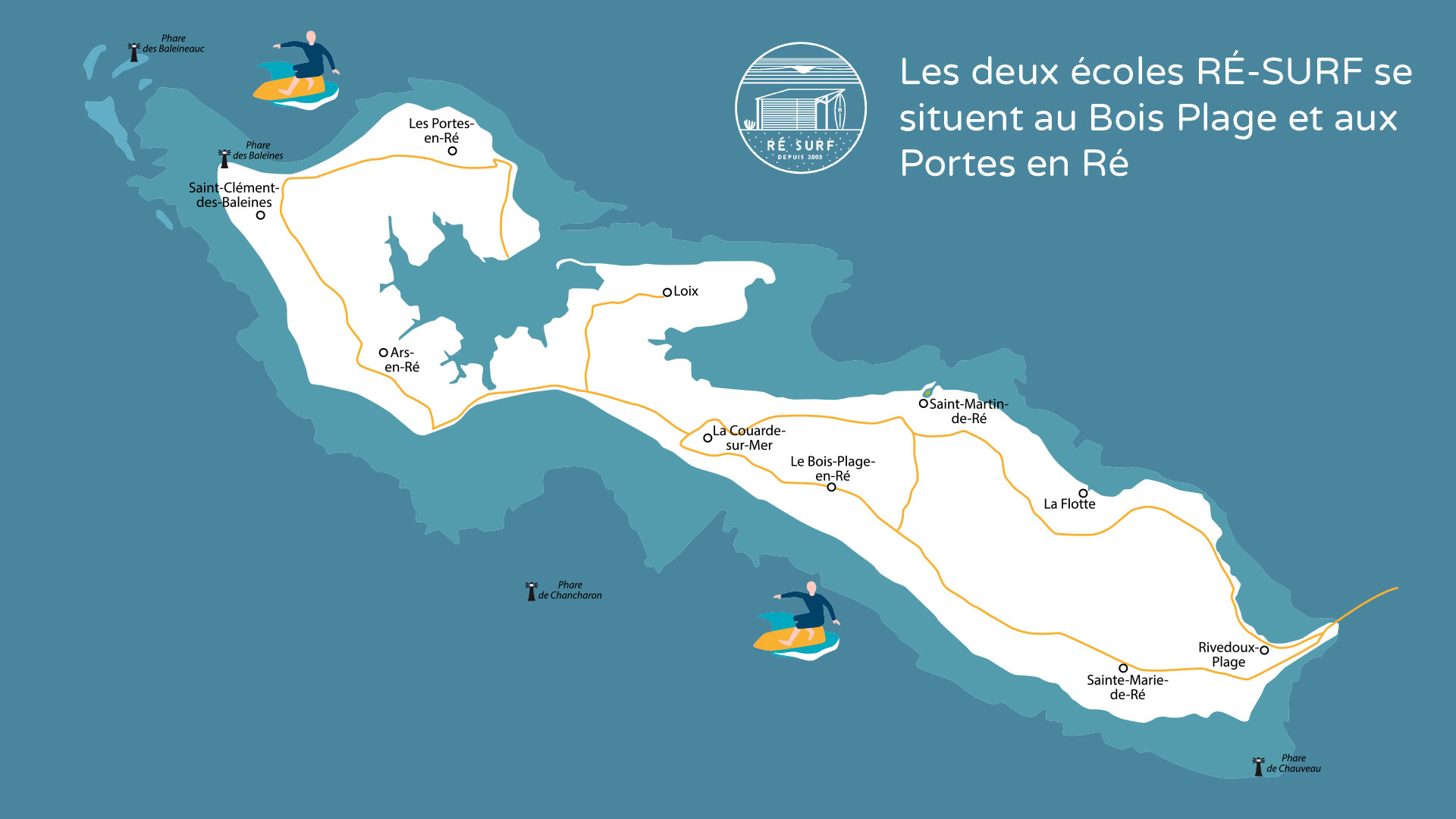
Point de rendez-vous Bois-Plage-en-Ré (sept – juin)Le Bois Plage-en-Ré
Point de rendez-vous Bois-Plage-en-Ré (juillet-août)Le Bois Plage-en-Ré
Point de rendez-vous Les Portes-en-Ré (juillet-août)Les Portes-en-Ré
Du soleil, des vagues, du sable fin et l’école Résurf 🤩
ON VOUS ATTEND
AVEC IMPATIENCE







Ce site utilise des cookies. En poursuivant votre navigation sur le site, vous acceptez notre utilisation des cookies.
OKEn savoir plus×Paramètres de cookies et de confidentialité
Nous pouvons demander que les cookies soient réglés sur votre appareil. Nous utilisons des cookies pour nous faire savoir quand vous visitez nos sites Web, comment vous interagissez avec nous, pour enrichir votre expérience utilisateur, et pour personnaliser votre relation avec notre site Web.
Cliquez sur les différentes rubriques de la catégorie pour en savoir plus. Vous pouvez également modifier certaines de vos préférences. Notez que le blocage de certains types de cookies peut avoir une incidence sur votre expérience sur nos sites Web et les services que nous sommes en mesure d'offrir.
Ces cookies sont strictement nécessaires pour vous fournir des services disponibles sur notre site Web et d'utiliser certaines de ses fonctionnalités.
Puisque ces cookies sont strictement nécessaires pour livrer le site, vous ne pouvez pas les refuser sans impact sur la façon dont notre site fonctionne. Vous pouvez les bloquer ou les supprimer en changeant les paramètres de votre navigateur et forcer le blocage de tous les cookies sur ce site.
Ces cookies recueillent des informations qui sont utilisées soit sous forme agrégée pour nous aider à comprendre comment notre site est utilisé, sur l'efficacité de nos campagnes de marketing, ou pour nous aider à personnaliser notre site Web et l'application pour vous afin d'améliorer votre expérience.
Si vous ne voulez pas que nous suivions votre visite à notre site, vous pouvez désactiver le suivi dans votre navigateur ici:
Nous utilisons également différents services externes tels que Google WebFonts, Google Maps et les fournisseurs de vidéo externes. Comme ces fournisseurs peuvent collecter des données personnelles comme votre adresse IP, nous vous permettons de les bloquer ici. Veuillez prendre note que cela pourrait fortement réduire la fonctionnalité et l'apparence de notre site. Les modifications prendront effet une fois que vous rechargerez la page.
Paramètres Google webfont:
Paramètres Google Map:Vimeo et YouTube Video Embeds:
Vous pouvez lire plus sur nos cookies et les paramètres de confidentialité en détail sur notre Page de Politique de Confidentialité.
Politique de confidentialitéRéouverture de l’école de surf le 4 avril 2026.
Les réservations pourront être effectuées à partir du 1er mars 2026.
En attendant voici notre BLOG 🤙